
Kickstart Your Testing Career: Contributing to Playwright Open Source Projects
Want to break into software testing? Tired of tutorial projects that don't translate to real-world experience? Looking to build a portfolio that actually impresses hiring managers?
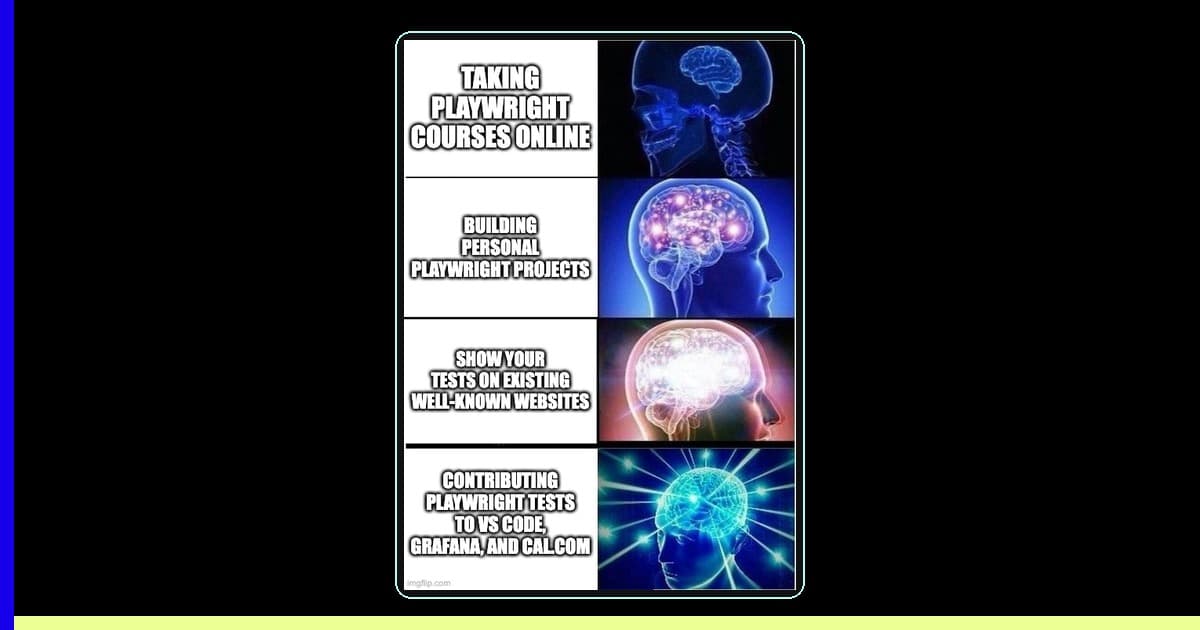
Why Playwright is Your Secret Weapon for Career Growth
Contributing to open source projects with Playwright is your answer.
Playwright, developed by Microsoft, has rapidly become the go-to testing framework for modern web applications. Its powerful multi-browser support, auto-waiting capabilities, and developer-first approach make it the tool of choice for companies scaling their testing infrastructure. By contributing Playwright tests to open source projects, you're not just learning—you're proving you can work with production-grade testing tools.
Why Playwright is Perfect for Serious Testers
1. True Cross-Browser Testing
Unlike other frameworks, Playwright tests run on Chromium, Firefox, AND WebKit with a single API:
import { test, expect } from '@playwright/test';

test('works across all browsers', async ({ page }) => {
  await page.goto('https://example.com');
  await page.getByRole('button', { name: 'Sign in' }).click();
  await expect(page).toHaveURL(/.*dashboard/);
});
Run the same test on all three browsers with zero code changes.
2. Built for Scale and Reliability
- Auto-waiting: No more flaky tests from timing issues
- Parallel execution: Tests run concurrently by default
- Trace viewer: Debug failed tests with full context
- Network interception: Mock APIs without external dependencies
3. Modern Testing Patterns
Playwright is built for modern web applications:
- Web components and Shadow DOM
- Multiple tabs and contexts
- Mobile emulation
- API testing alongside UI testing
- Visual comparisons
4. Industry Momentum
Major projects are migrating FROM Cypress TO Playwright (Apache Superset, Trezor Suite). Why? Better performance, reliability, and maintainability at scale.
The Open Source Advantage
Real-World Experience Beats Tutorials
Anyone can follow a Udemy course. Only open source contributors can say:
- "I improved the test coverage for [Major Project]"
- "I fixed flaky tests in a CI/CD pipeline handling 100+ daily builds"
- "I collaborated with Microsoft's VS Code team on their test suite"
Your GitHub Profile is Your Resume
When you contribute to open source:
- Every commit is timestamped proof of your skills
- Pull requests show your problem-solving process
- Code reviews demonstrate how you handle feedback
- Issue discussions reveal your communication abilities
Learn from the Best Engineers
Open source projects with Playwright tests are maintained by:
- Microsoft engineers (VS Code, TypeScript)
- Enterprise teams (Grafana, Mattermost)
- YC-backed startups (Cal.com, Documenso)
Their code review feedback is free, world-class education.
Network Effects
Contributing to open source:
- Gets you noticed by maintainers who are often hiring
- Connects you with other contributors globally
- Establishes you as someone who "ships" rather than just talks
- Builds relationships that last beyond any single project
Your 30-Day Playwright Contribution Plan
Days 1-7: Master the Fundamentals
Day 1-2: Installation and Core Concepts
npm init playwright@latestWork through:
Day 3-4: Advanced Features
Study:
Day 5-7: CI/CD Integration
Learn:
Days 8-14: Study Production Code
Pick 2-3 projects from the list below. For each:
- Clone and run their tests
git clone <repository>
npm install
npx playwright install --with-deps
npm run test:e2e- Analyze their structure
- How do they organize test files?
- What's their naming convention?
- How do they handle authentication?
- What custom fixtures do they use?
- How is CI configured?
- Take notes on patterns you like and want to adopt
Days 15-21: Your First Contribution
Step 1: Find the Right Issue
Look for labels:
good first issuehelp wantedtestinge2e testsquality assurance
Step 2: Claim It
Comment: "I'd like to work on this. Would adding Playwright tests for [specific scenario] help?"
Step 3: Set Up Locally
# Fork the repo on GitHub, then:
git clone https://github.com/YOUR_USERNAME/project.git
cd project
npm install
npx playwright install --with-deps

# Run existing tests to ensure your setup works
npm run test:e2e
Step 4: Write Quality Tests
Follow the project's patterns:
// Use their existing fixtures and helpers
test.describe('Feature Name', () => {
  test.beforeEach(async ({ page }) => {
    // Setup specific to these tests
    await page.goto('/feature');
  });

  test('should handle the happy path', async ({ page }) => {
    // Arrange
    await page.getByLabel('Email').fill('user@example.com');

    // Act
    await page.getByRole('button', { name: 'Submit' }).click();

    // Assert
    await expect(page.getByText('Success')).toBeVisible();
  });

  test('should validate required fields', async ({ page }) => {
    await page.getByRole('button', { name: 'Submit' }).click();
    await expect(page.getByText('Email is required')).toBeVisible();
  });
});
Step 5: Submit Your PR
Write a clear description:
## Description
Adds Playwright E2E tests for the user registration flow.

## Tests Added
- Happy path: successful registration
- Error handling: duplicate email
- Validation: required field checks

## Checklist
- [x] Tests pass locally
- [x] Added to CI workflow
- [x] Follows project's test patterns
- [x] No flaky tests (ran 10 times)
Step 6: Engage with Feedback
- Respond within 24 hours
- Ask clarifying questions
- Make requested changes
- Thank reviewers
Days 22-30: Level Up
- Make a second, more complex contribution
- Help review someone else's test PR
- Write a blog post about what you learned
- Share your experience on Twitter/LinkedIn
10 Production Projects Using Playwright
These are real applications where your contributions matter:
1. VS Code
- Repository: https://github.com/microsoft/vscode
- What It Is: Microsoft's popular code editor
- Why Contribute: Work with Microsoft engineers, learn from world-class test infrastructure
- Good For: Advanced testers, excellent for your portfolio
- Tests: Cross-browser web build testing
2. TypeScript
- Repository: https://github.com/microsoft/TypeScript
- What It Is: TypeScript language and compiler
- Why Contribute: Testing the TypeScript website and tools
- Good For: Intermediate to advanced, great for understanding compiler testing
- Impact: Your tests help millions of developers
3. Cal.com
- Repository: https://github.com/calcom/cal.com
- What It Is: Open source Calendly alternative
- Why Contribute: Active startup with responsive maintainers, extensive test suite
- Good For: All levels, modern Next.js stack
- Tests: Booking flows, calendar integrations, email handling
- Note: YC-backed company - great for networking
4. Documenso
- Repository: https://github.com/documenso/documenso
- What It Is: Open source DocuSign alternative
- Why Contribute: Growing project, they acknowledge test flakiness and need help
- Good For: Intermediate testers, good opportunity to make impact
- Tests: Document signing workflows, PDF generation, email flows
- Challenge: 2,000+ workflow runs - optimization opportunities
5. xterm.js
- Repository: https://github.com/xtermjs/xterm.js
- What It Is: Terminal emulator for web browsers
- Why Contribute: Unique testing challenges, specialized domain
- Good For: Advanced testers interested in terminal emulation
- Tests: Terminal rendering, input handling, escape sequences
6. Elastic APM JS Agent
- Repository: https://github.com/elastic/apm-agent-rum-js
- What It Is: JavaScript performance monitoring for Elastic
- Why Contribute: Enterprise-grade project, complex scenarios
- Good For: Advanced testers, performance testing experience
- Tests: Benchmark tests, real user monitoring
7. Grafana
- Repository: https://github.com/grafana/grafana
- What It Is: Observability and data visualization platform
- Why Contribute: Massive scale, enterprise adoption, active development
- Good For: Intermediate to advanced, visualization testing
- Tests: Dashboard interactions, data source integrations, alerting
- Note: Major open source project used worldwide
8. Mattermost
- Repository: https://github.com/mattermost/mattermost
- What It Is: Open source Slack alternative
- Why Contribute: They run BOTH Playwright and Cypress - unique learning opportunity
- Good For: Advanced testers, see both frameworks in production
- Tests: Real-time messaging, file uploads, integrations
- Stats: 99.84% Cypress pass rate, 96.10% Playwright pass rate
9. Apache Superset
- Repository: https://github.com/apache/superset
- What It Is: Data visualization and business intelligence platform
- Why Contribute: They're ACTIVELY MIGRATING from Cypress to Playwright
- Good For: Advanced testers, rare opportunity to contribute to migration
- Impact: Help shape their testing future
- Note: Apache Foundation project - huge credibility
10. Trezor Suite
- Repository: https://github.com/trezor/trezor-suite
- What It Is: Cryptocurrency hardware wallet interface
- Why Contribute: High-security application, migration from Cypress
- Good For: Intermediate to advanced, security testing experience
- Tests: Wallet operations, transaction signing, device communication
- Note: Security-critical testing - great resume item
Choosing Your First Project
🟢 Beginner-Friendly
Start with Cal.com:
- Active, welcoming community
- Clear contribution guidelines
- Modern stack (Next.js, Prisma, TypeScript)
- Regular releases and PR reviews
- Real startup environment
Why it's great for beginners:
- Well-documented test patterns
- Responsive maintainers
- Issues labeled for newcomers
- Real-world business logic to test
🟡 Intermediate Challenge
Try Grafana or Documenso:
- More complex applications
- Existing test infrastructure to learn from
- Opportunity to improve flaky tests
- Real production issues to solve
Skills you'll develop:
- Test optimization
- Debugging flaky tests
- CI/CD pipeline improvements
- Visual testing patterns
🔴 Advanced Opportunities
Dive into VS Code, Mattermost, or Superset:
- Enterprise-level complexity
- Architectural testing decisions
- Performance optimization
- Multi-framework comparison (Mattermost)
- Migration strategies (Superset, Trezor)
What you'll gain:
- Experience with massive codebases
- Understanding of testing at scale
- Exposure to advanced patterns
- Work with top engineers
Writing Tests That Get Merged
1. Use Proper Locators
// ❌ Bad - Fragile, implementation-dependent
await page.locator('.btn-primary').click();
await page.locator('#userId').fill('123');

// ✅ Good - Semantic, user-focused
await page.getByRole('button', { name: 'Submit' }).click();
await page.getByLabel('User ID').fill('123');
await page.getByTestId('user-profile').click(); // When role/label not available
2. Ensure Test Isolation
// Each test should be independent
test.describe('User Management', () => {
  test.beforeEach(async ({ page, context }) => {
    // Fresh auth state for each test
    await context.addCookies([{ /* auth cookie */ }]);
    await page.goto('/users');
  });

  test('should create user', async ({ page }) => {
    // This test doesn't depend on others
  });

  test('should delete user', async ({ page }) => {
    // This test creates its own user to delete
    const userId = await createTestUser();
    // ... test deletion
  });
});
3. Handle Async Operations Properly
// ❌ Bad - Arbitrary waits
await page.click('button');
await page.waitForTimeout(2000); // Brittle!

// ✅ Good - Wait for actual conditions
await page.click('button');
await page.waitForResponse(resp =>
  resp.url().includes('/api/users') && resp.status() === 200
);
await expect(page.getByText('Success')).toBeVisible();
4. Write Descriptive Tests
// ❌ Bad
test('test1', async ({ page }) => { /* ... */ });

// ✅ Good
test('should display validation error when submitting empty form', async ({ page }) => {
  await page.goto('/contact');
  await page.getByRole('button', { name: 'Submit' }).click();

  await expect(page.getByText('Name is required')).toBeVisible();
  await expect(page.getByText('Email is required')).toBeVisible();
});
5. Use Fixtures for Complex Setup
// fixtures.ts
import { test as base } from '@playwright/test';

export const test = base.extend({
  authenticatedPage: async ({ page }, use) => {
    // Reusable auth setup
    await page.goto('/login');
    await page.getByLabel('Email').fill('test@example.com');
    await page.getByLabel('Password').fill('password');
    await page.getByRole('button', { name: 'Sign in' }).click();
    await page.waitForURL('/dashboard');

    await use(page);
  },
});

// In your test
test('should access protected route', async ({ authenticatedPage }) => {
  await authenticatedPage.goto('/admin');
  await expect(authenticatedPage.getByRole('heading', { name: 'Admin Panel' })).toBeVisible();
});
Common Pitfalls (And How to Avoid Them)
1. Flaky Tests Kill Credibility
Problem: Test passes sometimes, fails others
Solution:
- Use Playwright's built-in waiting mechanisms
- Don't use
waitForTimeoutexcept for debugging - Ensure test isolation (no shared state between tests)
- Run tests multiple times locally before submitting
# Run your test 10 times to check for flakiness
npx playwright test --repeat-each=10 path/to/test.spec.ts
2. Testing Implementation, Not Behavior
Problem: Tests break when refactoring
Solution: Test what users see and do, not internal details
// ❌ Bad - Tests implementation
test('should call API with correct parameters', async ({ page }) => {
  await page.route('/api/users', route => {
    expect(route.request().postData()).toContain('name=John');
  });
});

// ✅ Good - Tests user outcome
test('should display success message after creating user', async ({ page }) => {
  await page.getByLabel('Name').fill('John');
  await page.getByRole('button', { name: 'Create' }).click();
  await expect(page.getByText('User created successfully')).toBeVisible();
});
3. Slow Tests
Problem: Test suite takes forever
Solution:
- Use parallel execution (Playwright default)
- Mock API calls when appropriate
- Don't test the same thing multiple times
- Use
test.skipfor known issues temporarily
4. Poor Error Messages
// ❌ Bad
await expect(page.locator('.user-name')).toBeVisible();

// ✅ Good
await expect(
  page.locator('.user-name'),
  'User name should be displayed after login'
).toBeVisible();
Building Your Testing Portfolio
1. Create a Testing Showcase
Update your GitHub profile README:
# QA Engineer | Test Automation Specialist

## Open Source Contributions

### 🎯 Playwright Testing

**Cal.com** - Open Source Scheduling Platform
- [PR #123](link): Added E2E tests for booking flow (15 test cases)
- [PR #145](link): Fixed flaky tests in calendar integration (98% → 100% pass rate)
- **Impact**: Improved CI reliability, reduced false positives by 40%
- **Tech**: Playwright, Next.js, TypeScript, GitHub Actions

**Grafana** - Observability Platform
- [PR #234](link): Implemented dashboard interaction tests
- [PR #256](link): Added visual regression tests for charts
- **Impact**: Caught 3 critical bugs before production
- **Tech**: Playwright, Go, Docker, Kubernetes

### 📊 Stats
- **50+ commits** across 5 open source projects
- **20+ PRs merged** in testing infrastructure
- **10+ issues resolved** related to test flakiness
- **3 projects** using my test patterns as standards
2. Document Your Journey
Write Blog Posts:
- "How I Added Playwright Tests to Cal.com"
- "5 Lessons from Testing Open Source Projects"
- "Fixing Flaky Tests: A Case Study"
Create Video Content:
- Screen recordings of test debugging
- Tutorials on Playwright patterns
- PR walkthroughs explaining your approach
Share on Social Media:
Just merged my first PR to @calcom! 🎉

Added Playwright tests for the booking flow:
✅ 15 new test cases
✅ 100% pass rate across 3 browsers
✅ Integrated with CI/CD

Next up: Tackling some flaky tests in the calendar integration.

#playwright #testing #opensource
3. Build Reusable Patterns
Create and share:
- Custom fixtures for common scenarios
- Utility functions for authentication
- CI/CD workflow templates
- Test reporting configurations
Share these as GitHub Gists or blog posts.
The 6-Month Roadmap to Success
Months 1-2: Foundation
- Goal: 5-10 small contributions
- Focus: Learn project patterns, fix documentation, add simple tests
- Projects: 2-3 beginner-friendly repos
Months 3-4: Growth
- Goal: 3-5 significant contributions
- Focus: Complex test scenarios, fixing flaky tests, test refactoring
- Projects: Move to intermediate-level challenges
Months 5-6: Leadership
- Goal: Become a recognized contributor
- Focus: Review others' PRs, mentor newcomers, propose test architecture improvements
- Projects: Advanced, maintainer-level involvement
By Month 6, You'll Have:
✅ Technical Skills
- Production-grade test automation experience
- CI/CD integration expertise
- Multi-browser testing proficiency
- Performance testing knowledge
✅ Portfolio
- 30-50 commits across multiple projects
- 15-25 merged PRs
- Issues resolved and features tested
- Published articles/videos
✅ Network
- Relationships with open source maintainers
- Connections with other contributors
- References for job applications
- Industry recognition
✅ Career Assets
- GitHub profile that impresses recruiters
- Real-world experience to discuss in interviews
- Demonstrable problem-solving abilities
- Portfolio of production code
Making the Leap to Employment
How to Leverage Your Contributions
On Your Resume:
Open Source Test Automation Engineer (2024-Present)
• Contributed Playwright E2E tests to 5 production applications
• Improved test reliability from 95% to 99.5% in Cal.com project
• Collaborated with Microsoft engineers on VS Code test suite
• Reduced CI/CD pipeline execution time by 30% through test optimization
In Interviews:
- Walk through your PR reviewing your test design decisions
- Explain how you handled code review feedback
- Discuss challenges you overcame (flaky tests, CI issues)
- Show your understanding of testing best practices
Networking:
- Mention contributions when applying to companies
- Use maintainers as references (with permission)
- Connect with other contributors on LinkedIn
- Attend conferences where projects are represented
Your Next Steps
Today
- ⭐ Star 3 projects from this list that interest you
- 📖 Read their CONTRIBUTING.md files
- 🏃 Run their test suites locally
This Week
- 🔍 Find your first "good first issue"
- 💬 Comment expressing interest
- 🍴 Fork the repository
This Month
- ✍️ Submit your first PR
- 🤝 Engage with code review
- 🎉 Get your first contribution merged
The Bottom Line
Traditional education and boot camps teach theory. Open source teaches practice.
Employers don't care if you watched 40 hours of Playwright tutorials. They care if you can:
- Write reliable tests for real applications
- Work with existing codebases
- Collaborate with teams
- Ship quality code
Your GitHub contribution graph proves you can do all of this.
Playwright + Open Source = Career Acceleration
Ready?
Pick one project. Clone it. Run the tests. Find an issue. Make your mark.
Your testing career starts now. 🚀
Essential Resources
- Playwright Documentation
- Playwright Best Practices
- Test Runner API
- CI/CD Guide
- Trace Viewer
- Open Source Guide
Building your testing career one commit at a time. Follow for more guides on test automation, Playwright, and open source contribution strategies.
Desplega.ai helps you deploy with confidence through intelligent QA automation. Learn more →
Related Posts
When I Reject v0 Code: Pattern-Matching Rules for Safer UI Generation
A practical v0 review gate for safer generated React UI: AST checks, Playwright smoke tests, accessibility rules, and rejection signals.
Cody's Repository Indexing: Does Cognitive Offloading Create Knowledge Gaps in Large Codebases? | Desplega AI
A practical deep dive into Cody repository indexing, context retrieval, and how indie hackers avoid AI-created knowledge gaps.
Hot Module Replacement: Why Your Dev Server Restarts Are Killing Your Flow State | desplega.ai
Stop losing 2-3 hours daily to dev server restarts. Master HMR configuration in Vite and Next.js to maintain flow state, preserve component state, and boost coding velocity by 80%.