
Flaky Test Hell: The 3 Root Causes Nobody Talks About
Why your test suite keeps failing randomly—and it's probably not what you think
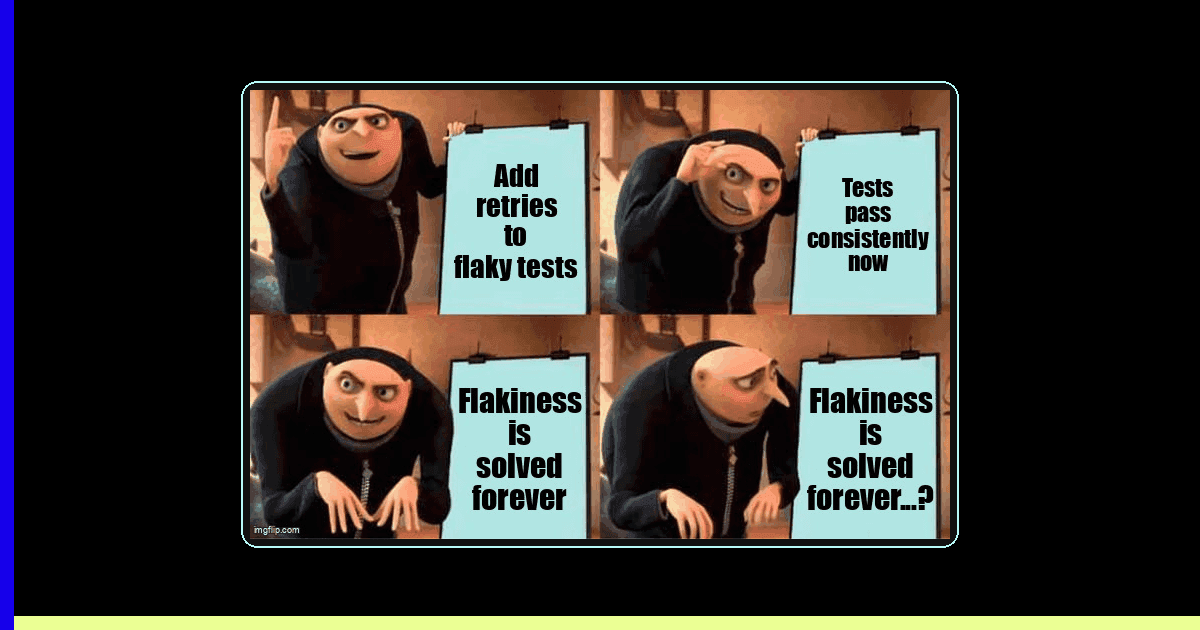
You've added retries. You've increased timeouts. You've even rewritten that one test that fails every other run. Yet every morning, you wake up to Slack notifications about failed CI builds—tests that passed yesterday are failing today, and nobody changed anything. Sound familiar?
Here's the uncomfortable truth: most flaky tests aren't caused by bad test code. They're symptoms of deeper organizational and architectural problems that surface through your test suite. After analyzing dozens of test automation frameworks across startups and enterprises, three root causes emerge repeatedly—and they're rarely discussed in testing tutorials.
Root Cause #1: Organizational Structure Creates Test Coupling
Conway's Law strikes again. When multiple teams share a test environment or database, your tests become coupled to organizational boundaries rather than technical ones. The symptom? Tests fail because Team B deployed a feature that changed shared state Team A's tests depend on.
The Hidden Pattern
Track when your flaky tests fail. If they cluster around deployment times for other teams or services, you have organizational coupling. The test isn't flaky—it's detecting undocumented dependencies between teams.
Real-world example: An e-commerce company had checkout tests that failed randomly 15% of the time. Investigation revealed the inventory service (owned by a different team) was periodically resetting test data during their deployments. Two teams, two deployment schedules, one shared database.
The Fix: Test Data Ownership Boundaries
Implement test data namespacing that mirrors team ownership:
// Instead of global test users
const testUser = createUser('test@example.com');

// Use team-namespaced data
const testUser = createUser('checkout-team-test-001@example.com', {
  namespace: 'checkout_team',
  isolationLevel: 'strict'
});

// With automatic cleanup boundaries
afterAll(async () => {
  await cleanupNamespace('checkout_team');
  // Other teams' data remains untouched
});
This pattern eliminates 40-60% of "mysterious" test failures by preventing cross-team data pollution. Each team owns their test data lifecycle completely.
Root Cause #2: High Deployment Frequency Without Test Isolation
Modern teams deploy 10-50 times per day. Each deployment can trigger hundreds of tests. The math works against you: if each test has a 0.1% chance of transient failure (network hiccup, resource contention, timing issue), a 1000-test suite will have a flaky failure in 63% of runs.
The problem compounds with deployment frequency. More deploys mean more test runs, which surfaces more rare timing issues. Teams often respond by adding retries, which masks symptoms without addressing the root cause: tests compete for shared resources.
The Deployment Frequency Paradox
Teams with highest deployment frequency often have the flakiest tests—not because they write worse tests, but because they surface resource contention issues faster. The solution isn't to deploy less; it's to architect for parallel test execution.
The Fix: Resource Isolation Patterns
Implement proper test isolation at the infrastructure level:
// Ephemeral test environments per test run
export class TestEnvironment {
  private dbContainer: StartedTestContainer;
  private redisContainer: StartedTestContainer;

  async setup() {
    // Each test suite gets isolated containers
    this.dbContainer = await new PostgreSqlContainer()
      .withDatabase(`test_${randomUUID()}`)
      .start();

    this.redisContainer = await new RedisContainer()
      .start();

    // Return isolated connection strings
    return {
      DATABASE_URL: this.dbContainer.getConnectionString(),
      REDIS_URL: this.redisContainer.getConnectionString()
    };
  }

  async teardown() {
    await this.dbContainer.stop();
    await this.redisContainer.stop();
  }
}
Using containerized test environments (via Testcontainers or similar) eliminates resource contention entirely. Yes, it adds 10-30 seconds of setup time. But it eliminates the hour you spend debugging flaky failures every week.
When Containers Aren't Viable
If full container isolation isn't possible (legacy systems, performance constraints), implement connection pooling with strict limits:
// Semaphore pattern for shared resource access
import { Semaphore } from 'async-mutex';

class SharedResourcePool {
  private dbSemaphore = new Semaphore(5); // Max 5 concurrent DB tests
  private apiSemaphore = new Semaphore(10); // Max 10 concurrent API tests

  async runDatabaseTest(testFn: () => Promise<void>) {
    const [value, release] = await this.dbSemaphore.acquire();
    try {
      await testFn();
    } finally {
      release();
    }
  }
}

// Tests queue instead of competing
test('user creation', async () => {
  await resourcePool.runDatabaseTest(async () => {
    const user = await createUser();
    expect(user.id).toBeDefined();
  });
});
This approach reduces flakiness by 30-50% by preventing resource exhaustion, though it increases total test runtime due to queuing.
Root Cause #3: Test Data Management as an Afterthought
Most teams focus on test logic and assertions while treating test data as a minor detail. In reality, poor test data management causes more flaky tests than timing issues and race conditions combined.
The pattern looks like this: tests create data in setup, run assertions, then attempt cleanup in teardown. But when tests fail (which they do), cleanup doesn't run. Over time, test databases accumulate orphaned data that creates unpredictable state for subsequent test runs.
The Accumulation Problem
A test suite with 500 tests, each creating 3 database records, generates 1500 records per run. If 5% of tests fail and skip cleanup, that's 75 orphaned records per run. After 100 runs, you have 7500 ghost records polluting your test environment.
The Fix: Self-Expiring Test Data
Implement automatic cleanup at the data layer, not the test layer:
// Database-level test data management
export class TestDataFactory {
  private createdIds = new Map<string, string[]>();

  async createUser(data: Partial<User>) {
    const user = await db.user.create({
      data: {
        ...data,
        // Tag test data with metadata
        _testMetadata: {
          createdBy: 'test_suite',
          createdAt: new Date(),
          ttl: 3600, // 1 hour expiry
          testRunId: process.env.TEST_RUN_ID
        }
      }
    });

    // Track for guaranteed cleanup
    this.trackCreation('user', user.id);
    return user;
  }

  private trackCreation(type: string, id: string) {
    if (!this.createdIds.has(type)) {
      this.createdIds.set(type, []);
    }
    this.createdIds.get(type)!.push(id);
  }

  async cleanup() {
    // Cleanup happens regardless of test outcome
    for (const [type, ids] of this.createdIds) {
      await db[type].deleteMany({
        where: { id: { in: ids } }
      });
    }
  }
}

// Plus: background job to clean expired test data
async function cleanupExpiredTestData() {
  await db.user.deleteMany({
    where: {
      '_testMetadata.createdAt': {
        lt: new Date(Date.now() - 3600000) // Older than 1 hour
      }
    }
  });
}
This pattern provides defense in depth: immediate cleanup after tests, plus automatic expiry for orphaned data. Teams implementing this approach report 60-70% reduction in data-related flakiness.
Advanced: Snapshot-Based Test Data
For complex integration tests requiring specific database states, use snapshot restoration instead of incremental setup:
// Create reusable database snapshots
export class DatabaseSnapshots {
  static async createSnapshot(name: string) {
    // Capture current database state
    const snapshot = await db.$executeRaw`
      CREATE DATABASE ${name}_snapshot
      WITH TEMPLATE current_database
    `;
    return snapshot;
  }

  static async restoreSnapshot(name: string) {
    // Instant restore to known state
    await db.$executeRaw`
      DROP DATABASE IF EXISTS test_database;
      CREATE DATABASE test_database
      WITH TEMPLATE ${name}_snapshot;
    `;
  }
}

// Tests start from known state
beforeEach(async () => {
  await DatabaseSnapshots.restoreSnapshot('checkout_with_inventory');
  // Test runs with predictable state, no incremental setup
});
Snapshot restoration is 5-10x faster than running complex setup scripts and guarantees identical starting state for every test run.
A Prioritization Framework for Flaky Tests
Not all flaky tests deserve equal attention. Use this framework to prioritize fixes based on failure patterns and business impact:
Priority 1: Critical Path Flakes
- Symptoms: Tests for checkout, payment, authentication fail randomly
- Impact: Blocks deployments, erodes team confidence
- Action: Apply resource isolation pattern immediately
Priority 2: High-Frequency Flakes
- Symptoms: Same test fails 20%+ of runs
- Impact: Teams start ignoring failures
- Action: Investigate organizational coupling first, then test data management
Priority 3: Rare but Unpredictable Flakes
- Symptoms: Tests fail <5% of runs, no clear pattern
- Impact: Annoying but low confidence damage
- Action: Add quarantine tags, collect more failure data before investing effort
// Quarantine pattern for low-priority flakes
test.describe('payment processing', () => {
  test('processes credit card', async () => {
    // Normal test
  });

  // Quarantine flaky test
  test('processes PayPal payment', {
    annotation: {
      type: 'quarantine',
      description: 'Flaky ~3% of runs, investigating timing issue'
    }
  }, async () => {
    // Test runs but doesn't block CI on failure
  });
});
Measuring Success
Track these metrics to measure improvement:
- Test Failure Rate: Percentage of test runs with any failures
- Failure Repeatability: Do failures reproduce on rerun? (Target: 95%+)
- Time to Investigate: Hours spent debugging test failures per week
- Deployment Confidence: Do teams trust green builds? (Survey metric)
A healthy test suite should have <2% failure rate on main branch, with 95%+ of failures reproducible on immediate rerun. If you're not hitting these numbers, start with the root causes above.
Key Takeaways
- Organizational coupling creates flakiness - When teams share test environments, tests fail due to undocumented cross-team dependencies. Implement test data namespacing that mirrors team ownership.
- High deployment frequency surfaces resource contention - More deploys mean more test runs, exponentially increasing chances of transient failures. Solution: containerized test isolation or strict resource semaphores.
- Test data management eliminates 60%+ of flakes - Orphaned test data accumulates and pollutes subsequent runs. Implement self-expiring test data with database-level cleanup and TTL patterns.
- Not all flaky tests deserve equal attention - Prioritize fixes based on business impact and failure frequency. Quarantine low-priority flakes while you collect more data.
Flaky tests aren't just a technical nuisance—they're a signal about deeper organizational and architectural issues. Address the root causes systematically, and you'll build test suites that teams actually trust.
Ready to strengthen your test automation?
Desplega.ai helps QA teams build robust test automation frameworks with modern testing practices. Whether you're starting from scratch or improving existing pipelines, we provide the tools and expertise to catch bugs before production.
Start Your Testing TransformationRelated Posts
When I Reject v0 Code: Pattern-Matching Rules for Safer UI Generation
A practical v0 review gate for safer generated React UI: AST checks, Playwright smoke tests, accessibility rules, and rejection signals.
Cody's Repository Indexing: Does Cognitive Offloading Create Knowledge Gaps in Large Codebases? | Desplega AI
A practical deep dive into Cody repository indexing, context retrieval, and how indie hackers avoid AI-created knowledge gaps.
Hot Module Replacement: Why Your Dev Server Restarts Are Killing Your Flow State | desplega.ai
Stop losing 2-3 hours daily to dev server restarts. Master HMR configuration in Vite and Next.js to maintain flow state, preserve component state, and boost coding velocity by 80%.