
The Cult of TDD: When Test-Driven Development Becomes Toxic Dogma
Test-Driven Development can be a superpower or a productivity killer—here's how to use TDD without letting it rule your indie projects.
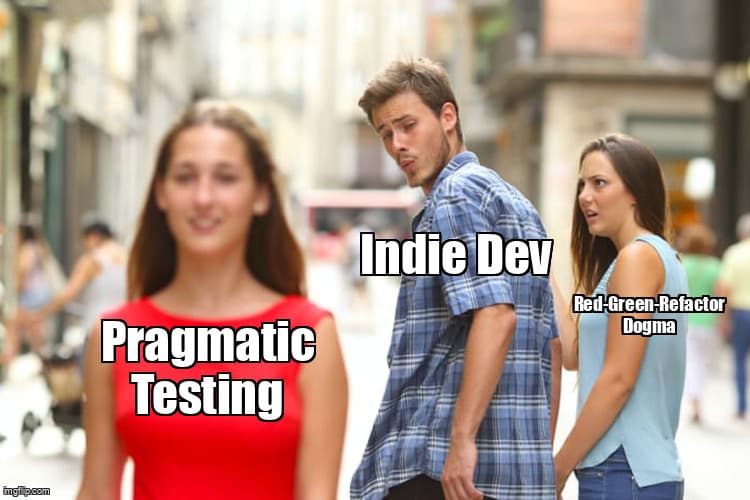
You know the type. Someone at the coffee shop in Barcelona overhears you mention unit tests and immediately launches into a sermon about the Red-Green-Refactor gospel. They speak in hushed tones about 100% code coverage like it's a religious obligation. But here's the truth: TDD is a tool, not a cult. And when you treat it like dogma, it becomes toxic—not just for your codebase, but for your sanity as a solo developer trying to ship an MVP from a co-working space in Madrid.
What Is TDD Actually Good For?
Test-Driven Development, popularized by Kent Beck in the early 2000s, follows a simple cycle: write a failing test, write the minimum code to make it pass, then refactor. The power of TDD isn't in the tests themselves—it's in the feedback loop. When you write tests first, you're forced to clarify your requirements before touching implementation details.
A 2021 study by Microsoft Research found that developers using TDD produced code with 60-90% fewer defects in production compared to test-last approaches. That's not trivial when you're running a SaaS from a beach in Valencia and can't afford 3am pager duty because your payment processing broke.
When TDD Shines
- Algorithmic logic with clear inputs and outputs
- API contracts that need stability over time
- Complex business rules prone to regression
- Payment processing and security-critical paths
- Code you expect to refactor frequently
The Dark Side: When TDD Becomes Toxic
Let's talk about the elephant in the room. The TDD community has a problem with gatekeeping. Forums and conference talks often frame TDD as a moral imperative. "If you're not doing TDD, you're not doing professional software development," they say. This mindset is not just unhelpful—it's actively harmful to indie hackers and solopreneurs who need to optimize for shipping speed, not theoretical purity.
According to research from the University of Oslo, developers working under strict TDD mandates spent 15-35% more time on testing infrastructure than those using a pragmatic, test-when-it-makes-sense approach. For a solo founder in Malaga trying to validate a product idea, that's time you literally cannot afford to waste.
Red Flags: Are You in the Cult?
Here are the warning signs that TDD has become toxic dogma in your workflow:
- Mocking everything: You spend more time writing mocks than actual code. Your tests break when you rename private methods.
- Testing implementation details: Your tests verify that specific functions were called, not that the right output was produced.
- 100% coverage obsession: You're writing tests for getters and setters "just in case."
- Red-Green-Refactor as law: You won't write a single line of code without a failing test first, even for exploratory spikes.
- Shaming others: You judge developers who don't TDD as "unprofessional."
A Pragmatic Alternative: Test-After with Intention
There's a middle ground between TDD zealotry and YOLO coding. I call it "Test-After with Intention." The workflow looks like this: spike the feature until you understand the shape of the solution, then lock in the behavior with tests before you refactor.
Let's compare approaches with a real example—a simple payment calculation service:
// The TDD Approach (before writing implementation)
// test/payment-calculator.test.ts
describe('calculateFinalPrice', () => {
  it('should apply 20% discount to orders over $100', () => {
    const result = calculateFinalPrice({ amount: 150, coupon: null });
    expect(result).toBe(120);
  });

  it('should apply coupon discount before percentage discount', () => {
    const result = calculateFinalPrice({
      amount: 150,
      coupon: { type: 'fixed', value: 20 }
    });
    expect(result).toBe(104); // (150 - 20) * 0.8
  });
});

// The Test-After Approach (after exploring the code)
// src/payment/payment-calculator.ts
// First, spike the solution to understand the domain...
// Then, lock in the behavior with tests

export function calculateFinalPrice(
  cart: ShoppingCart,
  config: PricingConfig
): PriceBreakdown {
  // Implement and immediately test
}
Notice that both approaches end up with tested code. The difference is in the discovery phase. TDD forces you to specify behavior before you understand the problem. Test-After lets you explore, then lock in the right behavior.
Code Comparison: TDD vs. Pragmatic Testing
| Aspect | Dogmatic TDD | Pragmatic Testing |
|---|---|---|
| Timeline | Test → Code → Refactor | Spike → Test → Refactor → Ship |
| Coverage Goal | 100% at all costs | Critical paths + regression prone areas |
| Mocking | Everything must be isolated | Test at the right level (integration preferred) |
| Learning Curve | Steep; mistakes compound | Gradual; mistakes are recoverable |
| Best For | Enterprise, known domains, large teams | Indie hacking, MVPs, exploration |
Troubleshooting: Common TDD Traps and How to Escape Them
Even with the best intentions, it's easy to fall into testing anti-patterns. Here's how to identify and fix the most common traps:
🪤 Trap 1: The Mocking Abyss
Symptom: You spend more time writing mocks than actual code. Your tests break when you rename private methods.
Fix: Follow the testing pyramid. 70% integration tests, 20% unit tests, 10% E2E. Only mock external services and I/O boundaries.
🪤 Trap 2: Testing Implementation, Not Behavior
Symptom: Your tests verify that specific functions were called, not that the right output was produced.
Fix: Test public APIs and observable behavior. If a test needs to know about private methods, it's testing the wrong thing.
🪤 Trap 3: The 100% Coverage Obsession
Symptom: You're writing tests for getters and setters "just in case."
Fix: Aim for coverage on business logic, not boilerplate. Studies by Google show diminishing returns above 70-80% coverage.
Edge Cases and Gotchas That Break TDD
TDD works beautifully for well-defined problems with clear inputs and outputs. But there are scenarios where it actively works against you:
- Exploratory spikes: When you're still figuring out the shape of a feature, TDD forces premature commitment to an interface that may change ten times before shipping.
- UI-heavy code: Writing tests first for visual components leads to brittle snapshots that break on every CSS tweak. Use visual regression tests instead.
- Glue code and integration layers: Code that wires together third-party APIs rarely benefits from unit tests — the real bugs live at the seams, so integration tests matter more.
- Prototypes and throwaway experiments: Writing tests for code you plan to delete is pure waste. Validate the idea first, then add tests if it graduates to production.
- Rapidly-changing domain models: If your business rules shift weekly, TDD tests become an expensive refactoring tax. Lock in tests once the domain stabilizes.
A Balanced Test Suite for Indie Hackers
If you're running solo, your test suite should reflect your reality: limited time, high iteration speed, and a focus on shipping value. Here's a pragmatic setup that borrows the best of TDD without inheriting the dogma.
// package.json — test script tiers
{
  "scripts": {
    "test": "vitest run",
    "test:unit": "vitest run src/**/*.test.ts",
    "test:integration": "vitest run tests/integration",
    "test:e2e": "playwright test",
    "test:watch": "vitest",
    "test:smoke": "playwright test --grep @smoke"
  }
}

// Suggested split for an indie SaaS
// - 70% integration tests (hit real DB, real HTTP)
// - 20% unit tests (pure logic, algorithms, validators)
// - 10% E2E smoke tests (login, checkout, critical paths)

// Smoke test example — runs in under 30 seconds on CI
import { test, expect } from '@playwright/test';

test('@smoke user can sign up and reach dashboard', async ({ page }) => {
  await page.goto('/signup');
  await page.fill('[name=email]', 'smoke@test.dev');
  await page.fill('[name=password]', 'Correct-Horse-Battery-9');
  await page.click('button[type=submit]');
  await expect(page).toHaveURL(/\/dashboard/);
});
The testing pyramid is upside down for most indie projects. You don't need 500 unit tests — you need 10 integration tests that cover your critical paths and tell you immediately when something breaks in production.
Is TDD Worth It for Solopreneurs?
The short answer: sometimes. Use TDD for algorithmic logic, payment flows, and anything where correctness is non-negotiable. Skip it for exploratory work, UI-heavy features, and glue code. The 120-character truth: TDD is a power tool, not a religion — use it when it helps you ship, not when it gets in the way.
Should You Refactor Existing Code with TDD?
Lock in behavior with characterization tests first, then refactor under the safety net. This is the pragmatic middle ground: you get TDD's refactoring confidence without the purity tax of rewriting every method red-green-refactor style from scratch.
The Bottom Line
TDD is a powerful tool when used with intention, and a productivity killer when wielded as dogma. The indie hackers shipping from Barcelona, Madrid, Valencia, and Malaga don't have time for ceremony — they need pragmatic testing that keeps them fast and safe. Pick the testing style that matches the problem, not the one that wins you points in online arguments.
Write tests when they help you think. Skip them when they slow down exploration. And never let anyone make you feel unprofessional for shipping working software without 100% coverage. The only metric that matters is whether your users get value — everything else is theater.
Ready to ship your next project faster?
Desplega.ai helps indie hackers and solopreneurs build and ship faster by bridging the gap between vibe coding and testing best practices.
Get StartedFrequently Asked Questions
Does TDD slow down development for indie projects?
Initially yes, but studies show it reduces debugging time by 40-90%. For indie projects, a pragmatic approach with selective TDD delivers the benefits without the ceremony.
When should I NOT write tests first?
Skip TDD when prototyping MVPs, building throwaway experiments, or working with rapidly changing requirements. Start with integration tests once the API stabilizes.
Can I do TDD without being dogmatic?
Absolutely. The best developers use TDD as a thinking tool, not a religion. Write tests when they help you design, skip them when they slow down exploration.
What is the biggest mistake new TDD practitioners make?
Testing implementation details instead of behavior. Your tests should verify what your code does, not how it does it. This prevents brittle tests that break on refactoring.
Should solo developers use TDD differently than teams?
Yes. Solo devs can rely more on integration tests and manual testing since the feedback loop is shorter. Teams need more unit tests to catch regressions from concurrent work.
Related Posts
Cody's Repository Indexing: Does Cognitive Offloading Create Knowledge Gaps in Large Codebases? | Desplega AI
A practical deep dive into Cody repository indexing, context retrieval, and how indie hackers avoid AI-created knowledge gaps.
Hot Module Replacement: Why Your Dev Server Restarts Are Killing Your Flow State | desplega.ai
Stop losing 2-3 hours daily to dev server restarts. Master HMR configuration in Vite and Next.js to maintain flow state, preserve component state, and boost coding velocity by 80%.
The Flaky Test Tax: Why Your Engineering Team is Secretly Burning Cash | desplega.ai
Discover how flaky tests create a hidden operational tax that costs CTOs millions in wasted compute, developer time, and delayed releases. Calculate your flakiness cost today.