v0 to Windsurf: Your First Real Git Workflow Without the Nightmares
You've shipped real things with v0. Now let's make sure you never lose them again.
You built something real with v0. A landing page, a SaaS dashboard, maybe a full app that actual people use. That's not nothing — that's a prototype with proof.
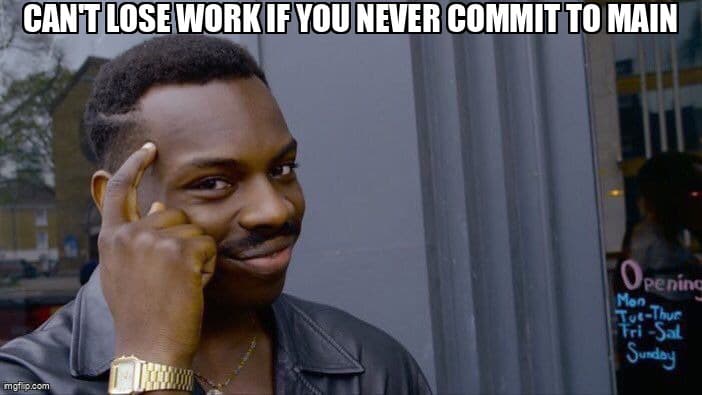
But then something happened. You clicked the wrong prompt. A component you spent an hour refining got overwritten. Or you wanted to hand the codebase to a collaborator and realized there was no codebase — just a browser tab.
This guide walks you from that moment of frustration to your first properly Git-tracked local project in Windsurf. No gatekeeping. No "real developer" lectures. Just the specific steps that make your work permanent.
Before and After: What Actually Changes
Understanding the workflow shift helps you move faster. Here's what life looks like on both sides of this migration.
| Situation | In v0 | In Windsurf + Git |
|---|---|---|
| Made a mistake | Re-prompt, hope it recovers | git checkout . restores instantly |
| Try a risky change | Duplicate the project and edit the copy | git checkout -b experiment takes 2 seconds |
| Collaborate with someone | Share v0 project link (read-only) | Push to GitHub, they clone and contribute |
| Deploy to production | v0's built-in deploy (limited config) | Vercel/Netlify auto-deploys from main branch |
| AI assistance | Prompt-based UI generation | Inline edits inside files you already own |
Prerequisite Checklist: What to Have Ready
Before starting the migration, confirm you have these five things. The whole process takes under an hour with them in place.
- v0 project access — Open your v0 project in a browser tab. You'll be downloading the code directly.
- Windsurf installed — Download from the Windsurf website and complete the setup wizard. Takes about 5 minutes.
- Node.js 18+ — Run
node --versionin any terminal. If missing, install via nodejs.org. - Git installed — Run
git --version. macOS users: install via Homebrew (brew install git). Windows: git-scm.com. - GitHub account (optional but recommended) — For pushing to a remote. Free at github.com. Not required for local-only workflows.
Quick Sanity Check
Run these three commands before you start. All three should return version numbers, not errors.
node --version   # should print v18.x.x or higher
git --version    # should print git version 2.x.x
npm --version    # should print 9.x.x or higher
Step-by-Step Migration: v0 to Windsurf in 7 Steps
Follow these steps in order. Each one builds on the last. Skipping ahead (especially past Step 4) is how people end up accidentally committing API keys.
Step 1 — Export Your v0 Project
- Open your v0 project at v0.dev
- Click the three-dot menu (⋯) in the top-right of the project view
- Select Download Code — this downloads a
.zipfile - Create a folder on your machine:
~/projects/my-project-name - Unzip the downloaded file into that folder
The unzipped folder will already look like a Next.js project with app/, components/, and package.json. That's exactly what Windsurf expects.
Step 2 — Open the Project in Windsurf
- Launch Windsurf
- Go to File > Open Folder
- Select the folder you just unzipped
- When prompted to trust the workspace, click Yes, I trust the authors
Windsurf will detect the Next.js project and may prompt you to install recommended extensions. Accept them — they add TypeScript highlighting and import resolution that make Cascade AI more accurate.
Step 3 — Install Dependencies
Open Windsurf's integrated terminal: Terminal > New Terminal (or Ctrl+`). Then run:
npm installThis creates node_modules/ — about 200MB of dependencies. Do NOT commit this folder. That's Step 4.
Step 4 — Create Your .gitignore (Before Anything Else)
This step must happen before git init. Generating the .gitignore first is what prevents the most common first-time mistakes: committing node_modules or API keys.
# In the Windsurf terminal, run:
npx gitignore node,nextjs

# Then verify it includes these critical lines:
cat .gitignore | grep -E "node_modules|.env|.next"
If your v0 project uses environment variables (Stripe keys, Supabase URLs, etc.), create a .env.local file and move them there. The .gitignore generated above already excludes .env.local from commits.
Step 5 — Initialize Git and Make Your First Commit
This is the moment your project becomes permanent. Three commands, less than 10 seconds.
git init
git add .
git commit -m "init: export from v0, add .gitignore"

# Verify what you committed (should NOT include node_modules or .env)
git show --stat HEAD
According to the 2025 Stack Overflow Developer Survey, 94.9% of professional developers use Git — making it the single most universal tool in software development. This commit is you joining that workflow.
Step 6 — Set Up Your First Feature Branch
The branch is your sandbox. Any change you make here can be discarded or merged independently from main.
# Create and switch to a new branch
git checkout -b feature/update-hero-section

# Make changes with Windsurf's Cascade AI...
# Then checkpoint your progress:
git add .
git commit -m "feat: update hero headline and CTA button color"

# When satisfied, merge back to main:
git checkout main
git merge feature/update-hero-section
Step 7 — Push to GitHub (Optional but Recommended)
# Create a new repo at github.com first, then:
git remote add origin https://github.com/yourusername/your-repo.git
git branch -M main
git push -u origin main
How Does Windsurf's AI Fill the Gap Left by v0?
Windsurf's Cascade AI generates, edits, and debugs components inline within files you already own — replacing v0's prompt-to-UI loop with in-context code assistance that preserves your project structure.
The mental model shift is small but important. In v0, you described what you wanted and received generated code. In Windsurf, you describe what you want to change inside code that already exists.
| v0 Concept | Windsurf Equivalent | What You Gain |
|---|---|---|
| Prompt to generate UI | Cascade: "Add a pricing card component here" | Component written into your actual file, not a sandbox |
| Undo button | git checkout . | Restore any file to any past commit, not just one step back |
| Duplicate project to experiment | git checkout -b experiment | Named, isolated branches — discard or merge any time |
| Regenerate from scratch | Cascade inline edit on existing component | Preserves surrounding code context, no regressions |
The 3-Commit Habit That Replaces Your Undo Button
The 3-commit habit is a repeatable Git routine — init, checkpoint, merge — that gives solo developers the same project safety net as professional teams, without requiring a full Git workflow education.
Most vibe coders who struggle with Git try to learn everything at once. The 3-commit habit deliberately ignores rebasing, cherry-picking, and stashing until they become obviously useful. Here's what you actually need:
- The Init Commit — Run once per project right after export. Captures the clean starting state. Message:
init: export from v0 - The Checkpoint Commit — Run whenever something works. Before a risky AI-assisted refactor, after a feature lands. Message:
feat: [what you just built]orfix: [what you just fixed] - The Merge Commit — Run when a branch's work is done and tested locally. Moves your feature from branch to
main. This is the signal to deploy.
The Rule That Prevents 80% of Git Pain
Never work directly on main. Always create a branch first (git checkout -b feature/name), do your work, then merge. This single rule means main is always in a deployable state and experiments never break production.
Workflow Translation: v0 Habits to Git Commands
These are the six most common v0 workflows translated to their Windsurf + Git equivalents. Read your old habit on the left, run the new command on the right.
# v0: "I'll just re-generate that component"
# Windsurf: Ask Cascade to edit the existing component
# In the file, highlight the component and press Cmd+I, then describe the change

# v0: "Let me duplicate this project to test something"
# Windsurf: Create a branch
git checkout -b experiment/try-new-layout

# v0: "Something broke, I need to go back"
# Windsurf: Check what changed and restore
git diff                    # see what changed
git checkout -- components/Hero.tsx   # restore one file
git checkout .              # restore everything

# v0: "I want to share this with a collaborator"
# Windsurf: Push to GitHub and share the repo URL
git push origin main
# Then invite them as a collaborator on GitHub

# v0: "I deployed but it broke, rolling back"
# Windsurf: Revert to previous commit
git log --oneline           # find the commit hash
git revert HEAD             # safely undo last commit

# v0: "Let me try this layout variation"
# Windsurf: Branch, build, compare, keep or discard
git checkout -b variation/centered-layout
# ... make changes ...
git checkout main           # switch back to compare
git diff main variation/centered-layout
Troubleshooting: The 5 Things That Go Wrong
These are the actual errors first-time migrators hit. Each one has a one-command fix.
Problem 1: "fatal: not a git repository"
You ran a git command before git init. Fix: Make sure you're inside the project folder, then run git init.
Problem 2: node_modules in your first commit
You forgot to create .gitignore before committing. Fix: Add node_modules/ to .gitignore, then run git rm -r --cached node_modules && git commit -m "fix: remove node_modules from tracking".
Problem 3: "error: src refspec main does not match any" on push
You haven't made any commits yet. Git can't push an empty branch. Fix: Complete Step 5 (make your first commit) before running git push.
Problem 4: Windsurf Cascade breaks a component you needed
This is what checkpoint commits are for. Fix: Run git checkout -- path/to/component.tsx to restore the last committed version of that specific file.
Problem 5: "npm run dev" fails after export
v0 sometimes exports projects with missing peer dependencies. Fix: Run npm install --legacy-peer-deps instead of plain npm install. This resolves version conflicts in the exported package.json.
Why This Migration Is Worth the 60 Minutes
According to GitHub's 2025 Octoverse Report, developers who use branching workflows ship features 23% faster than those working directly on a single branch — because they spend less time recovering from mistakes.
The State of Developer Ecosystem 2025 (JetBrains) found that 71% of solo developers who adopted Git-based workflows reported "significantly less lost work" within the first month. The tooling investment pays back immediately.
Windsurf's Cascade AI processes your full project context — not just the file you have open — which means its component edits respect your existing types, imports, and component hierarchy in a way that v0's isolated prompt environment cannot.
Weekend-Sized Checklist: From v0 Prototype to Maintainable Project
Use this as your action plan. Each item takes under 10 minutes. The full list fits in a Saturday morning.
- ☐ Export v0 project as zip and unzip into a local folder
- ☐ Install Windsurf and open the project folder
- ☐ Run
npm installin the integrated terminal - ☐ Generate
.gitignorewithnpx gitignore node,nextjs - ☐ Move any API keys to
.env.local - ☐ Run
git init && git add . && git commit -m "init: export from v0" - ☐ Verify the commit didn't include
node_modulesor.env - ☐ Create your first feature branch for your next planned change
- ☐ Make one change using Windsurf Cascade, then commit it
- ☐ Merge the branch to
mainand runnpm run devto confirm it works - ☐ (Optional) Push to GitHub and connect to Vercel for auto-deploys
Key Takeaways
- Export is instant — v0 projects download as standard Next.js zips. Windsurf opens them without any conversion step.
- Create .gitignore before git init — This single sequence prevents the two most common first-commit mistakes: committing
node_modulesand API keys. - The 3-commit habit replaces the undo button — Init, checkpoint, merge. That's 90% of solo Git usage.
- Branches cost nothing — Create one before every risky change. Discard it freely if the experiment fails.
- Windsurf Cascade fills the AI gap — Inline, context-aware code generation inside files you already own replaces v0's prompt-to-component loop.
- The whole migration fits in 60 minutes — Use the weekend checklist. You don't need to learn all of Git — just the six commands that matter for solo work.
Ready to level up your development workflow?
Desplega.ai helps solo developers and small teams ship faster with professional-grade tooling. From vibe coding to production deployments, we bridge the gap between rapid prototyping and scalable software.
Get Expert GuidanceFrequently Asked Questions
How do I export a v0 project to use locally with Windsurf?
Open your v0 project, click the three-dot menu, and select "Download Code." This exports a Next.js zip you unzip into a local folder, then open with Windsurf using File > Open Folder.
Do I need to know Git before switching from v0 to Windsurf?
No prior Git experience needed. The 3-commit habit (init, feature work, checkpoint) covers 90% of solo workflows. Windsurf's terminal panel lets you run git commands with inline AI explanations.
Will Windsurf's AI assistant replace what v0 does for UI generation?
Windsurf's Cascade AI generates and edits components inline without leaving your editor. It handles component creation, refactoring, and bug fixes — but you keep full code ownership from the start.
What should I put in .gitignore when migrating a v0 project?
At minimum: node_modules/, .env, .env.local, .next/, and .DS_Store. Run "npx gitignore node,nextjs" in the Windsurf terminal to generate a complete, project-appropriate .gitignore automatically.
How long does it take to migrate a v0 project to a Git-tracked Windsurf project?
Most solo developers complete the full migration — export, init, first commit, and branch setup — in 30 to 60 minutes. A weekend-sized project takes 2–4 hours including .gitignore and remote setup.
Related Posts
Hot Module Replacement: Why Your Dev Server Restarts Are Killing Your Flow State | desplega.ai
Stop losing 2-3 hours daily to dev server restarts. Master HMR configuration in Vite and Next.js to maintain flow state, preserve component state, and boost coding velocity by 80%.
The Flaky Test Tax: Why Your Engineering Team is Secretly Burning Cash | desplega.ai
Discover how flaky tests create a hidden operational tax that costs CTOs millions in wasted compute, developer time, and delayed releases. Calculate your flakiness cost today.
The QA Death Spiral: When Your Test Suite Becomes Your Product | desplega.ai
An executive guide to recognizing when quality initiatives consume engineering capacity. Learn to identify test suite bloat, balance coverage vs velocity, and implement pragmatic quality gates.